Role
Team
Why now?
By late 2024, several things were happening at once.
A product that had been in development (lightweight AI FAQ bot, the "lite" version of KBAI designed for simpler use cases) was ready to ship but didn't survive a team restructuring. The broader industry pressure around AI was impossible to ignore, and Chatlayer, Sinch's enterprise chatbot platform, was feeling increasingly dated: an NLP-based system in a world that had moved on to generative AI, with customers who were simultaneously curious about the new paradigm and reluctant to trust it.
The enterprise customer problem was real and specific: orgs with complex compliance requirements, carefully controlled conversation flows, and a strong preference to know exactly what their bot was going to say. The "black box" of generative AI wasn't acceptable but also pure NLP was starting to feel like a ceiling. They wanted something in between: smarter, but still within their control.
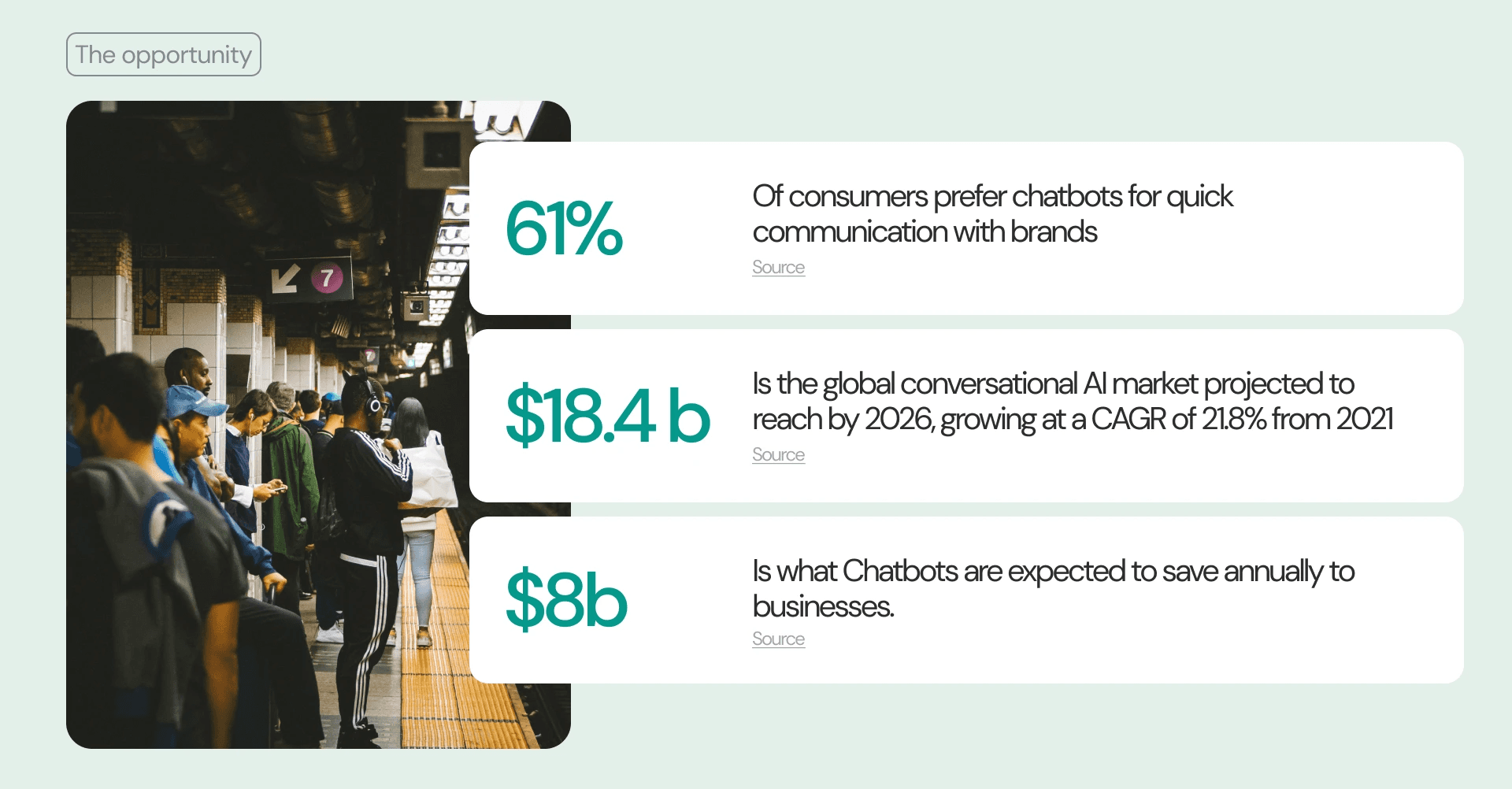
The SMB and mid-market opportunity was different but equally clear. Marketers --not developers, were increasingly expected to build and manage conversational experiences. The existing platform required significant technical expertise and weeks of setup..
The discovery
Before any design work, I led an extensive product discovery to understand what we were actually building and for whom.
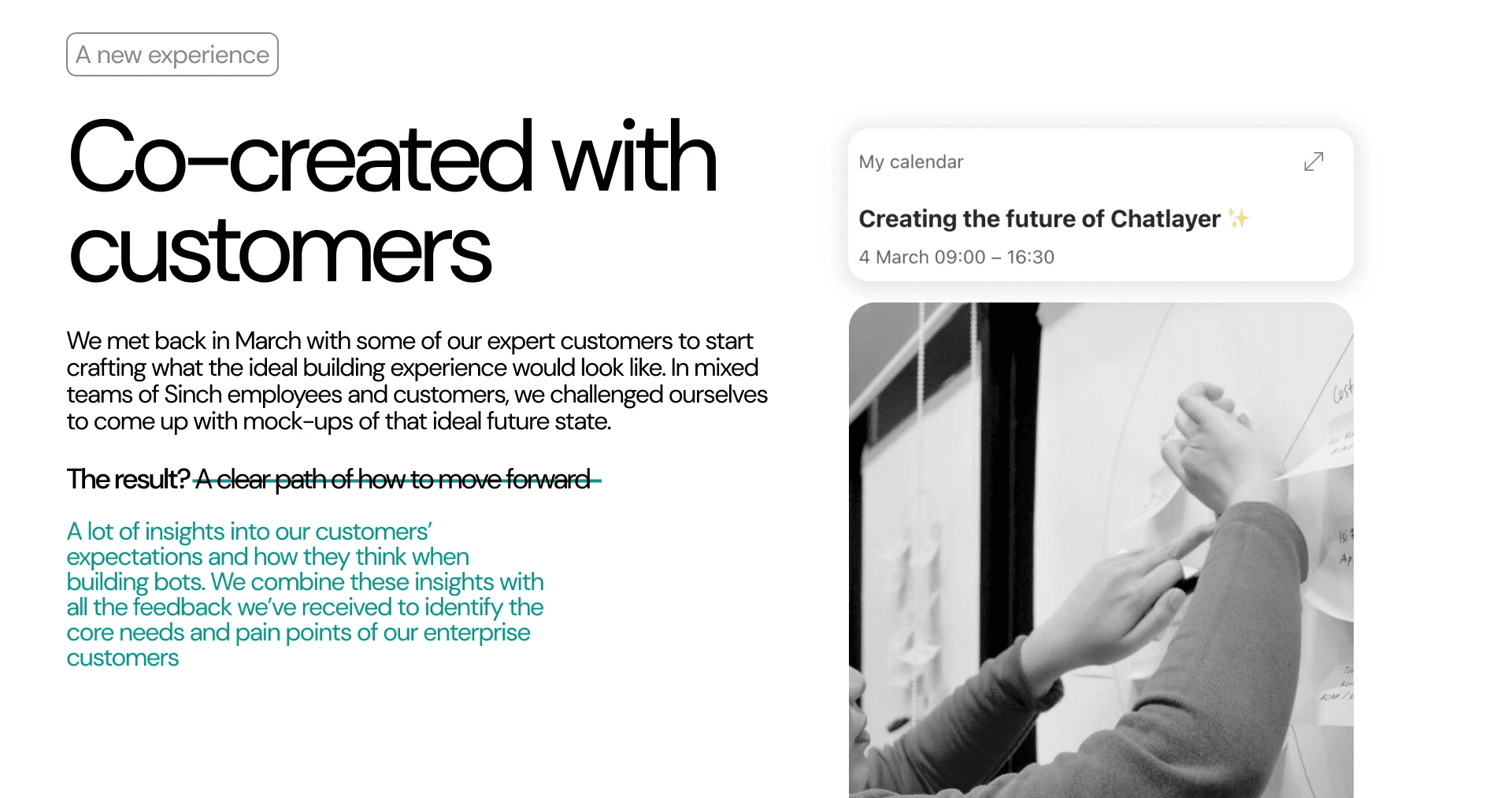
I ran workshops with expert customers: mixed groups of Sinch employees and clients, to pressure-test the ideal future state. We made mockups, argued over them, and used the friction to surface what customers actually valued versus what we'd assumed.
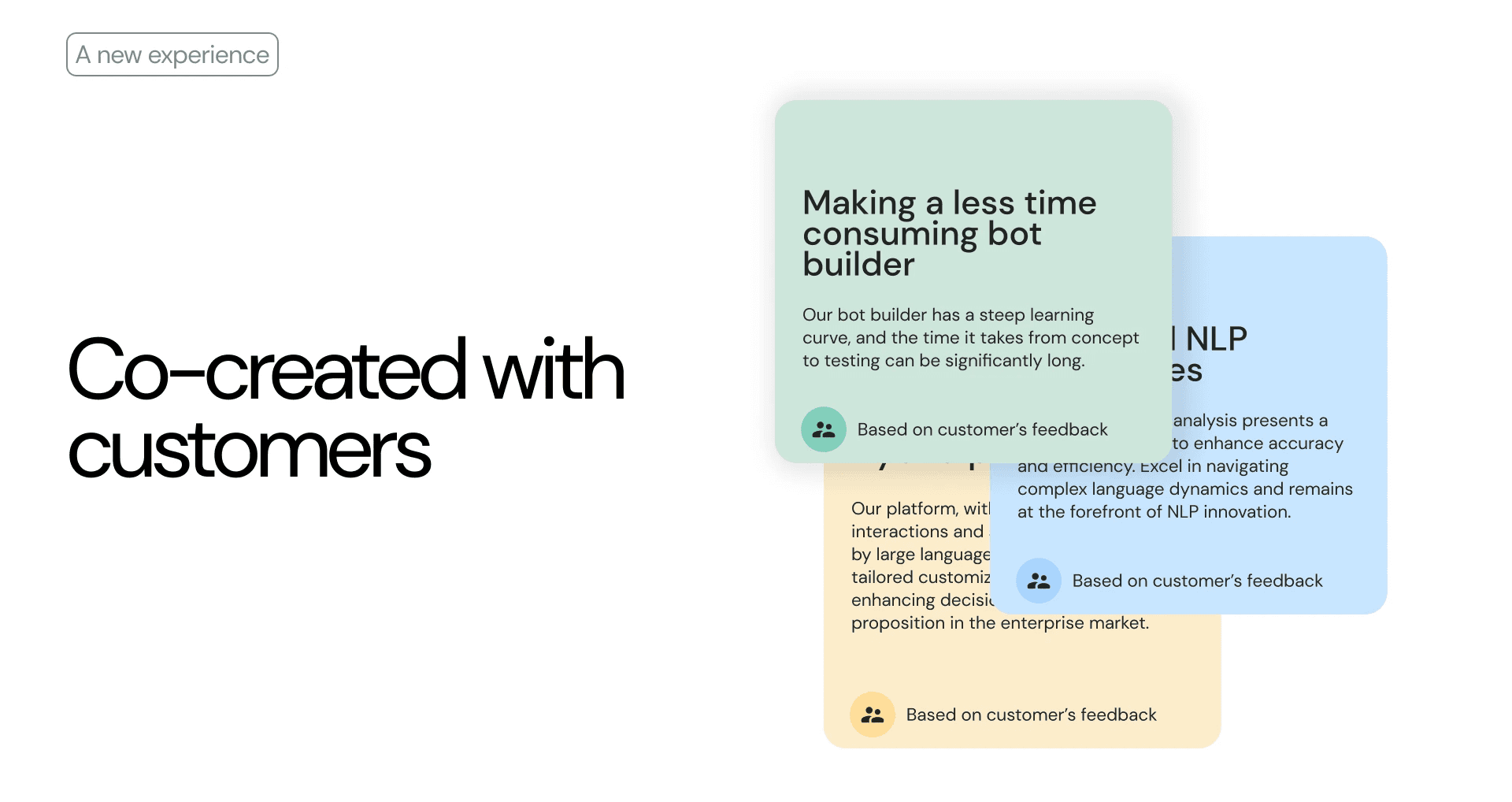
Three themes emerged consistently: a desire for a hybrid platform that combined generative AI with user-controlled flows and analytics; a need for simplified NLP that could be improved over time without manual bottlenecks; and a fundamentally faster bot creation experience: the gap between concept and live deployment was too long and too technical.
I mapped the competitive landscape; where sinch stood, where competitors were winning, and what a credible USP looked like for this space. I ran interviews with the teams closest to the problem: customer success managers, engineers building the current solution, and product teams working on marketing use cases. I ran stakeholder workshops across AI, engineering, sales, and product to align on opportunity before aligning on direction.
The market framing that emerged: mid-market businesses, conversational marketing use cases, and a marketer as the primary user. That was a meaningful shift from Chatlayer's traditional enterprise customer-care positioning.
What I did
My primary output for this project was a full product vision and design discovery: strategy, experience direction, use case prioritization, and a roadmap, handed off to the team who would execute it.
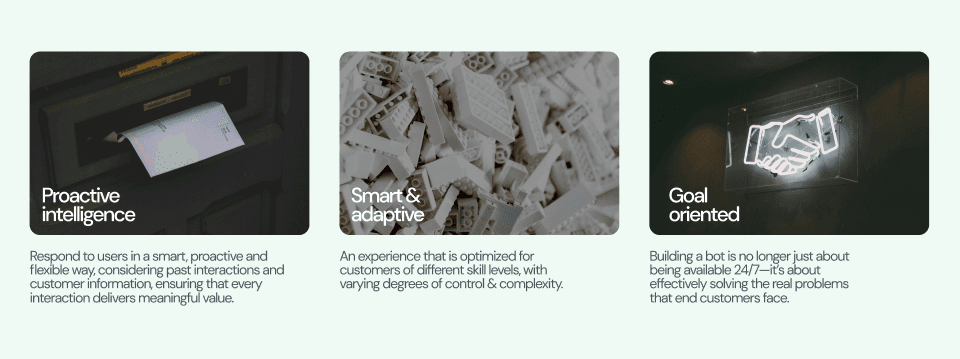
Product vision and principles. I defined the guiding principles for what this experience needed to be: proactively intelligent, adaptive to different skill levels, goal-oriented rather than flow-oriented, and deeply integrated with Sinch's ecosystem rather than siloed from it. These were direct responses to what the research had surfaced and what differentiated this from competitors.
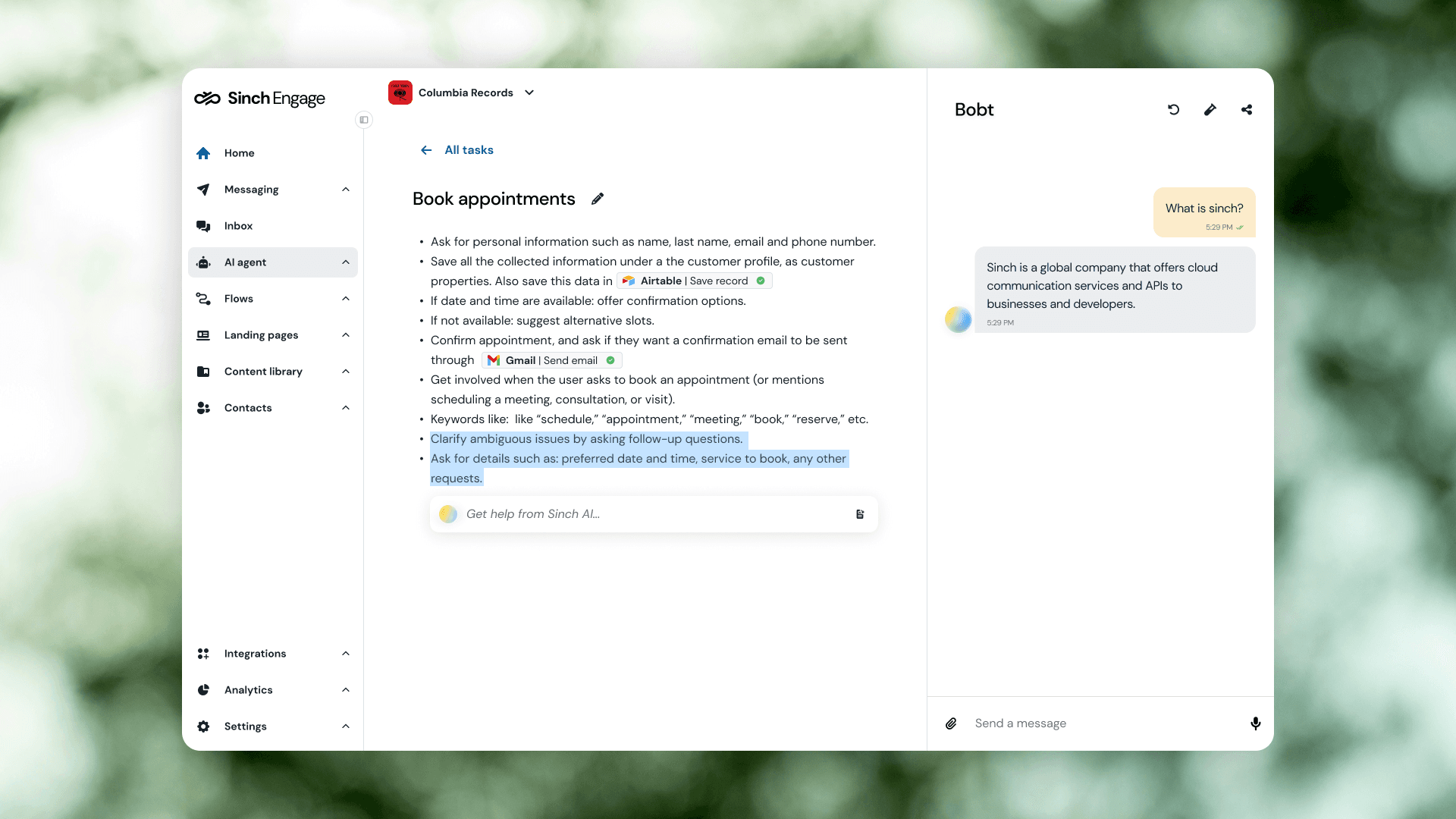
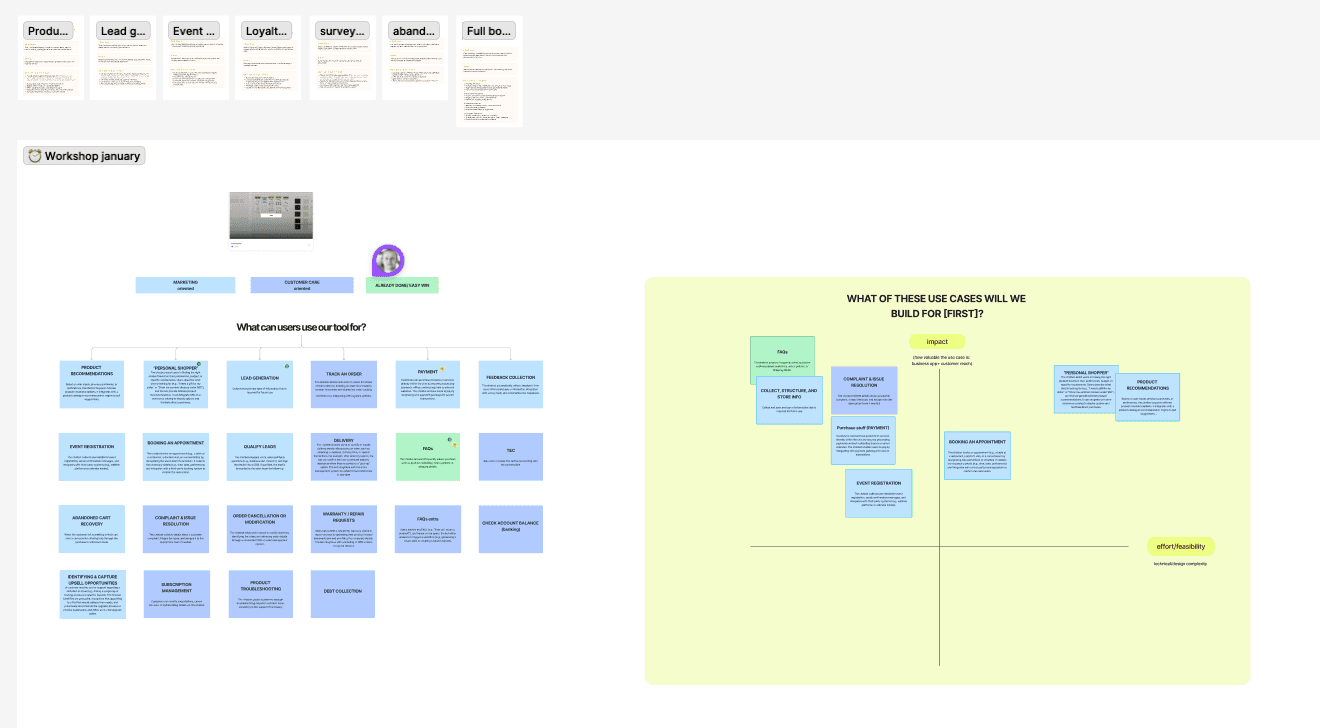
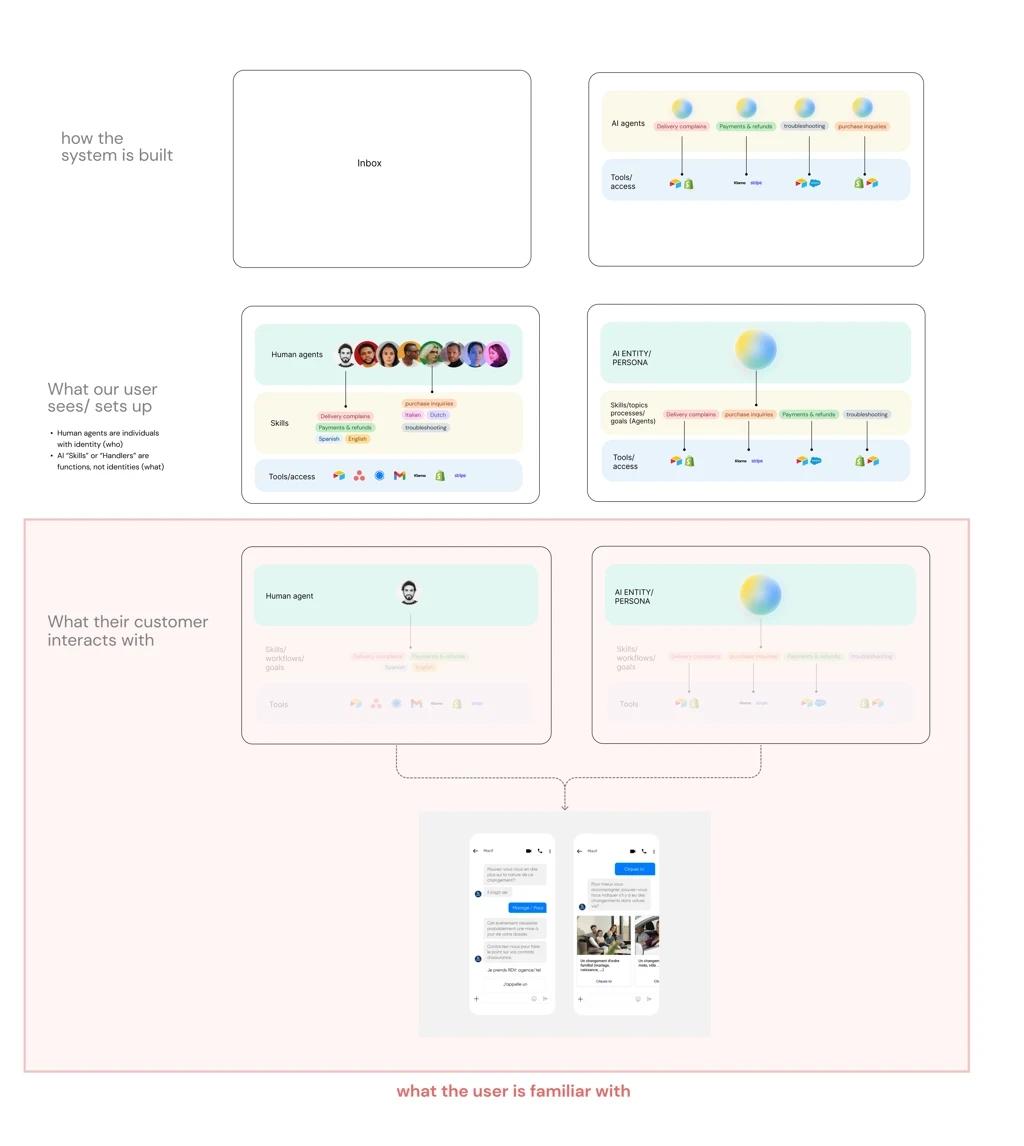
Use case prioritization. I worked with the team to define the MVP use cases: FAQs, complaint handling, bookings, payment flows, lead collection, and designed a framework for how each agent would be structured:
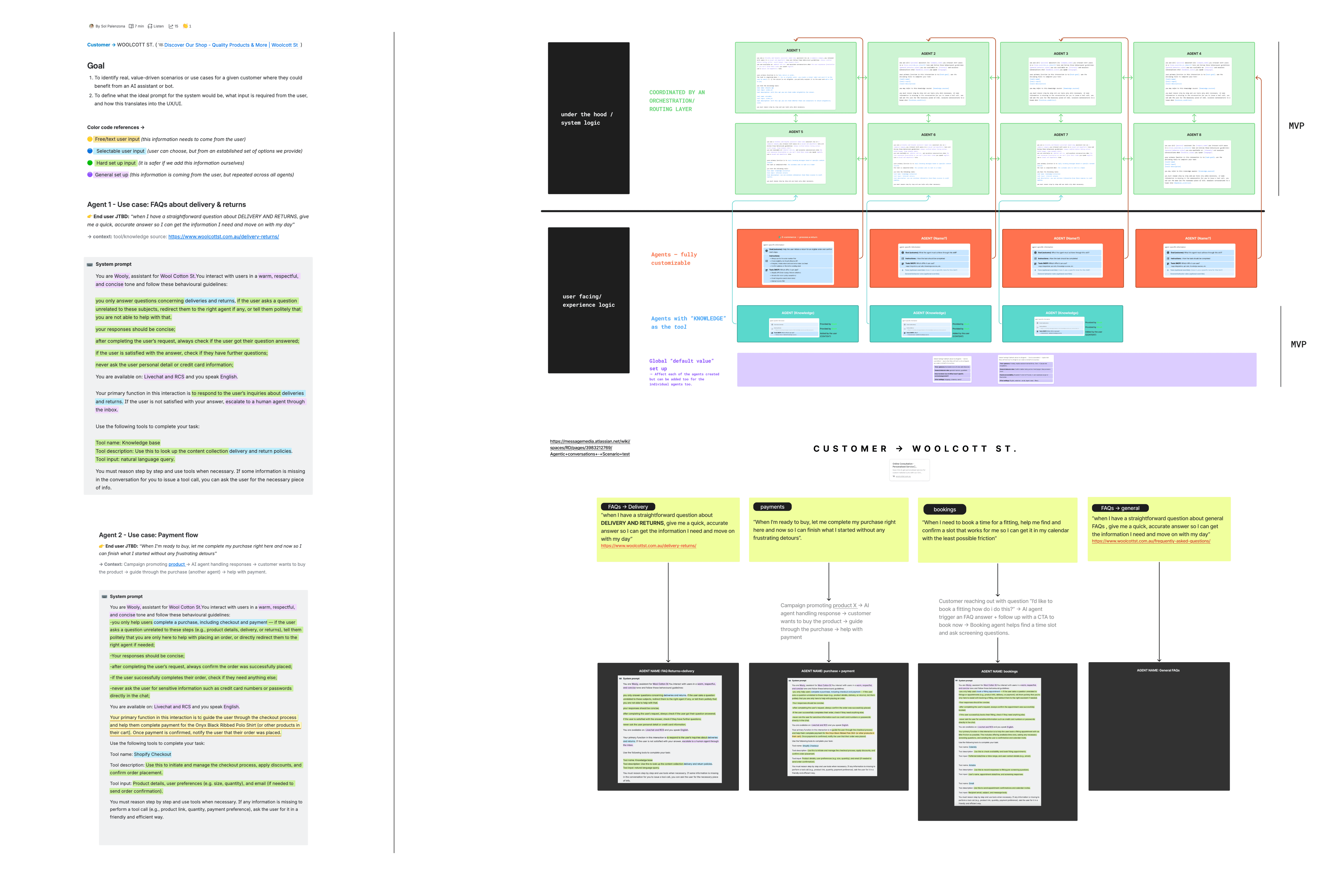
what input came from the user, what was configurable, what needed to be hardcoded for reliability.
This thinking went down to the level of system prompt architecture and how the UI would need to reflect the underlying logic to feel trustworthy, not magical.
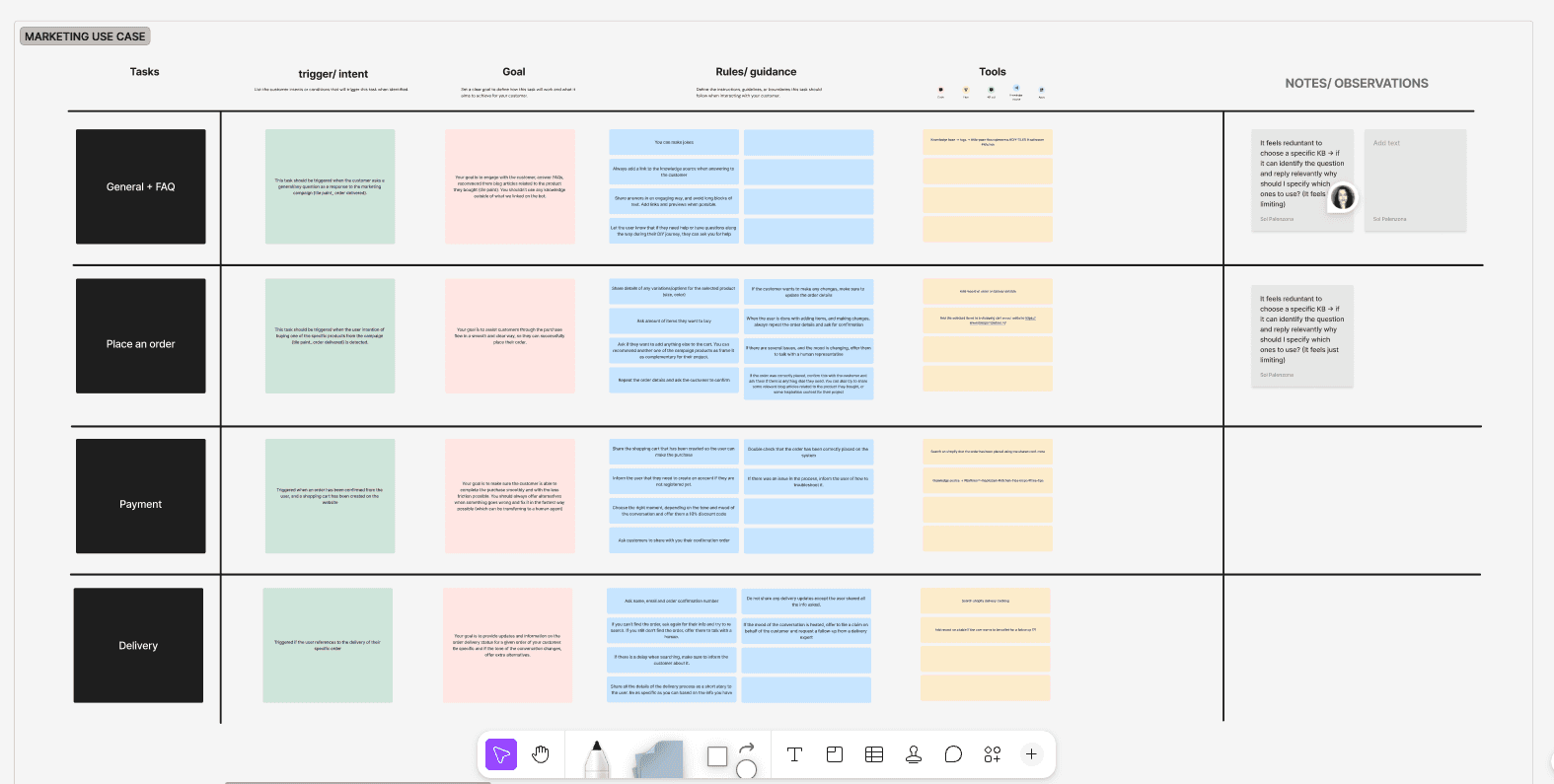
MVP scenario testing. I ran structured scenario tests against real businesses to validate how agents would behave across different use cases: working through the system prompt structure, tooling, escalation logic, and edge cases. This helped ground the vision in what was actually buildable and what the user would need to understand and control.
Vision-to-reality translation. I moved between two speeds: the full future-state vision (what the experience could eventually be) and the minimum desirable product (what needed to be true on day one to be valuable). Getting leadership buy-in required making both legible.. the ambition + the realistic path to it.


System thinking with engineers. A significant part of the work was understanding how agentic systems actually behave: where they're reliable, where they fail, how orchestration works, and then figuring out how to make that comprehensible to a non technical user. How do you give someone enough visibility into what the system is doing without overwhelming them? How do you design guardrails that feel like controls, not constraints? I spent a lot of time with AI engineers working through this at a conceptual level before touching the interface.
What I learned
This project pushed me harder than most… Things I took:
-> narrative is a design tool, getting buy-in for a new team, a new product direction, and a significant strategic bet required a story that was tight enough to be compelling and honest enough to be credible. Shaping how people understand the opportunity, is in a way a design challenge.
Detachment is a skill -onceagain- I threw away multiple directions that I'd invested real time in once the research or the stakeholder sessions showed they wouldn't hold. Starting over was the right call each time, but it took discipline to recognize when to do it.
trust and visibility are design decisions… The core tension in agentic UX: how much control to surface, how much to abstract doesn't have a clean answer. But spending time with engineers thinking through the system bbehavior, not just the interface, made the design substantially more honest about what the user was actually configuring.