Role
Team
The moment
When ChatGPT landed in late 2022, most product teams at Sinch found themselves in a familiar place: excited, uncertain, and slightly paralyzed. What should we build? Where do we start? Is AI going to replace us?
Chatlayer (acquired by Sinch) had been building AI-powered products for years. A strong team of ML engineers and a product team fluent in conversational AI and generative systems. That expertise became the foundation of what would be called the GenAI team, and where I led design.
The what
The role here was more than just shipping features, we were building the conditions for good AI work to happen across the whole organization, without every team reinventing the wheel, adding "AI sparkle" to things that didn't need it, or skipping the user entirely.
That meant working across three levels simultaneously: building real products, setting standards, and educating peers.
My role
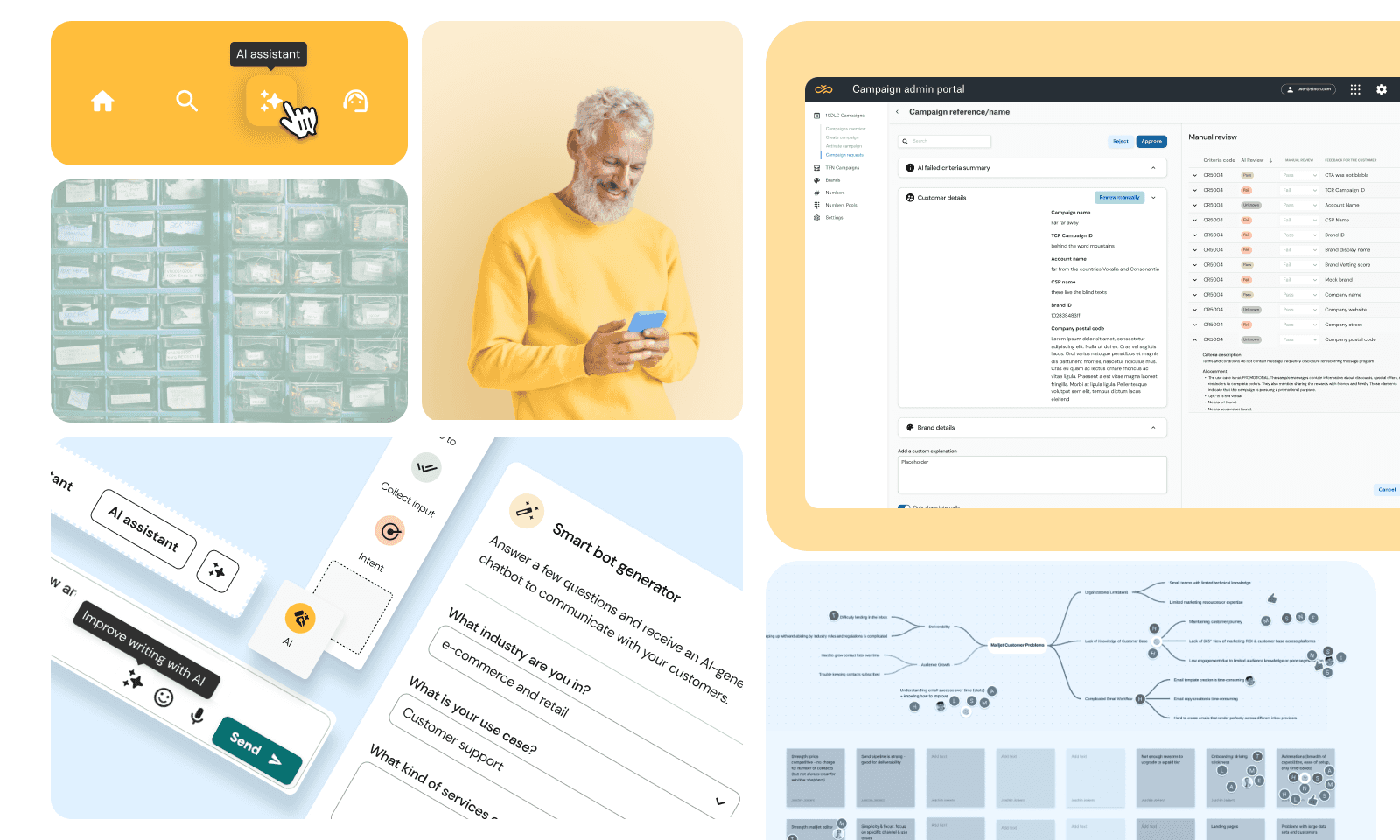
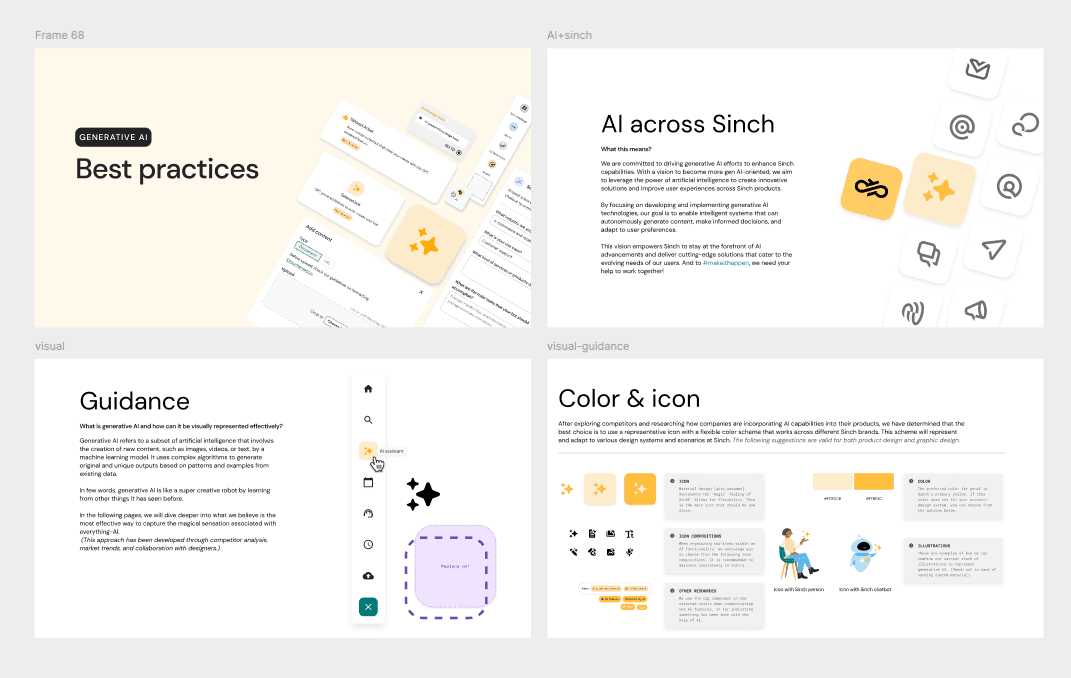
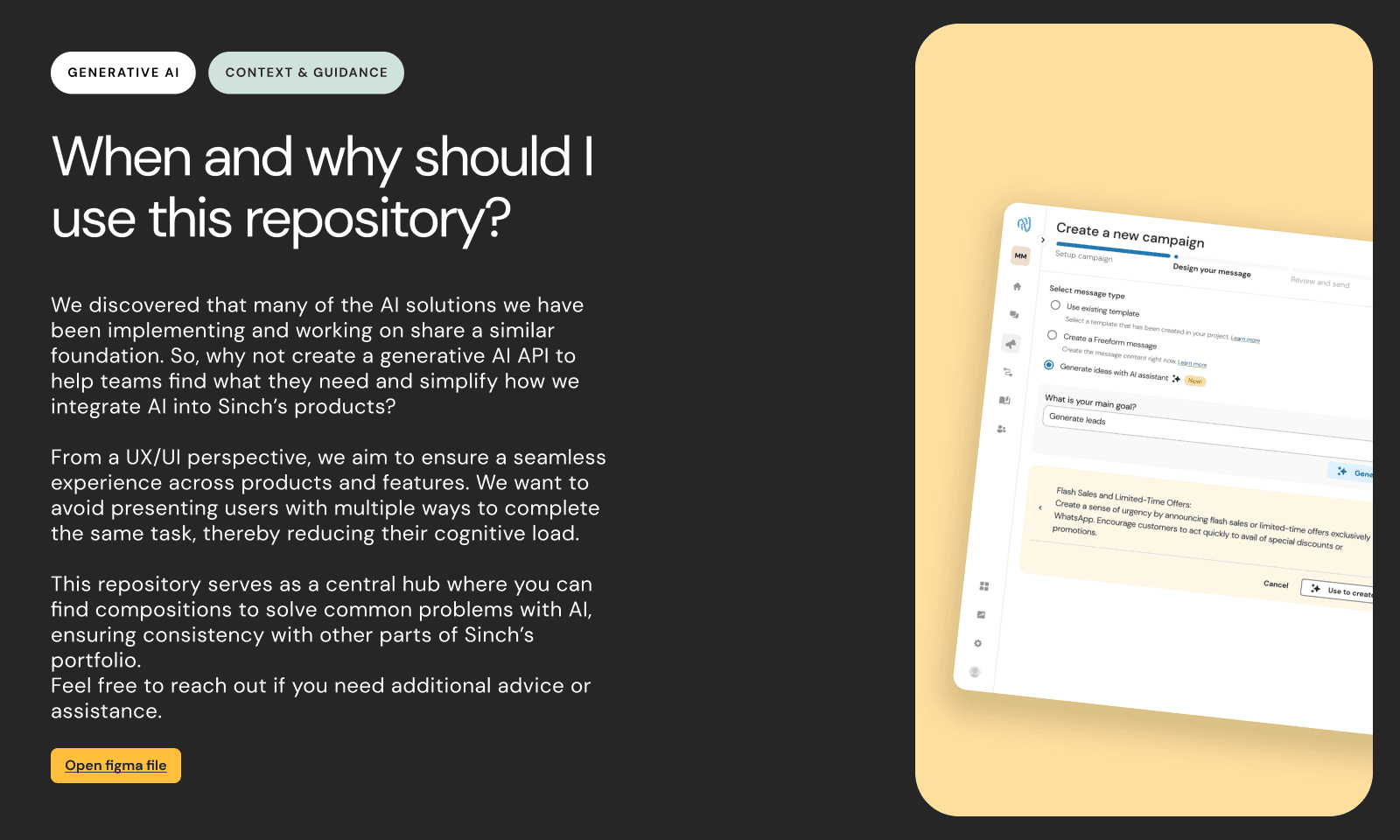
Standards and shared language. Working with the brand team, I co-created a unified visual and UX language for AI across Sinch's products: covering iconography, naming conventions, terminology, consent patterns, and interaction guidelines. This became the GenAI Best Practices guide, adopted across product and design teams company-wide. Alongside it, I built a living UX repository of reusable AI patterns, so teams designing their first AI feature weren't starting from scratch, and so the experience across Sinch felt coherent to users.
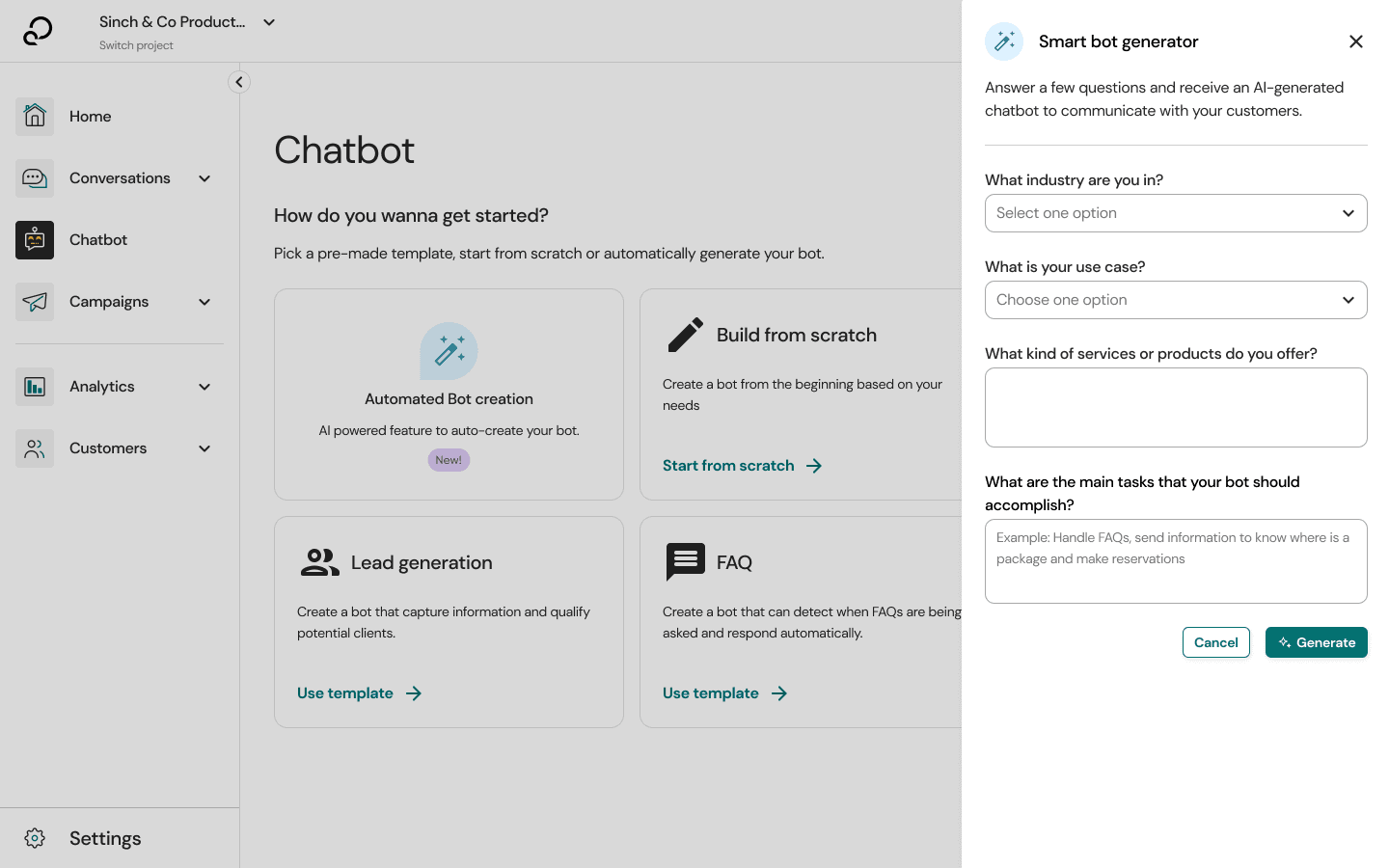
Experiments and rapid prototyping. We ran Wizard of Oz-style experiments to test AI concepts before building them. One example: an AI bot creation flow for Sinch Engage, intended to help SMB users get a working chatbot up and running by answering a few prompting questions. We mocked the UI, manually generated outputs behind the scenes, and put it in front of users: testing their understanding of prompting, their expectations of the input-output relationship, and where the experience broke down. This kind of low-cost validation let us learn fast without committing engineering resources prematurely.
Enabling the organization. I co-planned and facilitated company-wide hackathons, including one where the GenAI team participated and won the pitch-perfect award yay!. I gave training sessions on how to identify which user problems are good candidates for AI, and helped run product discovery workshops for teams across the organization. The framing was: you're the domain expert, we bring the AI knowledge, let's figure out together what actually makes sense to work on. A recurring theme in those sessions was helping teams resist the pressure to add AI to things that didn't need it.
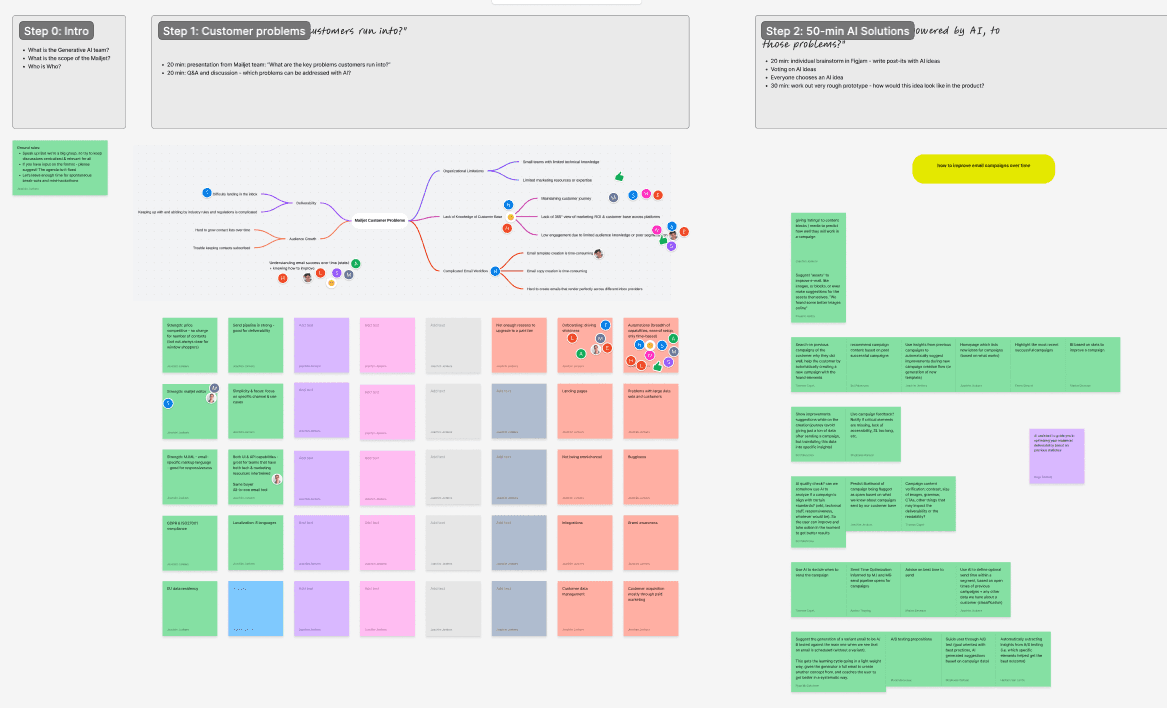
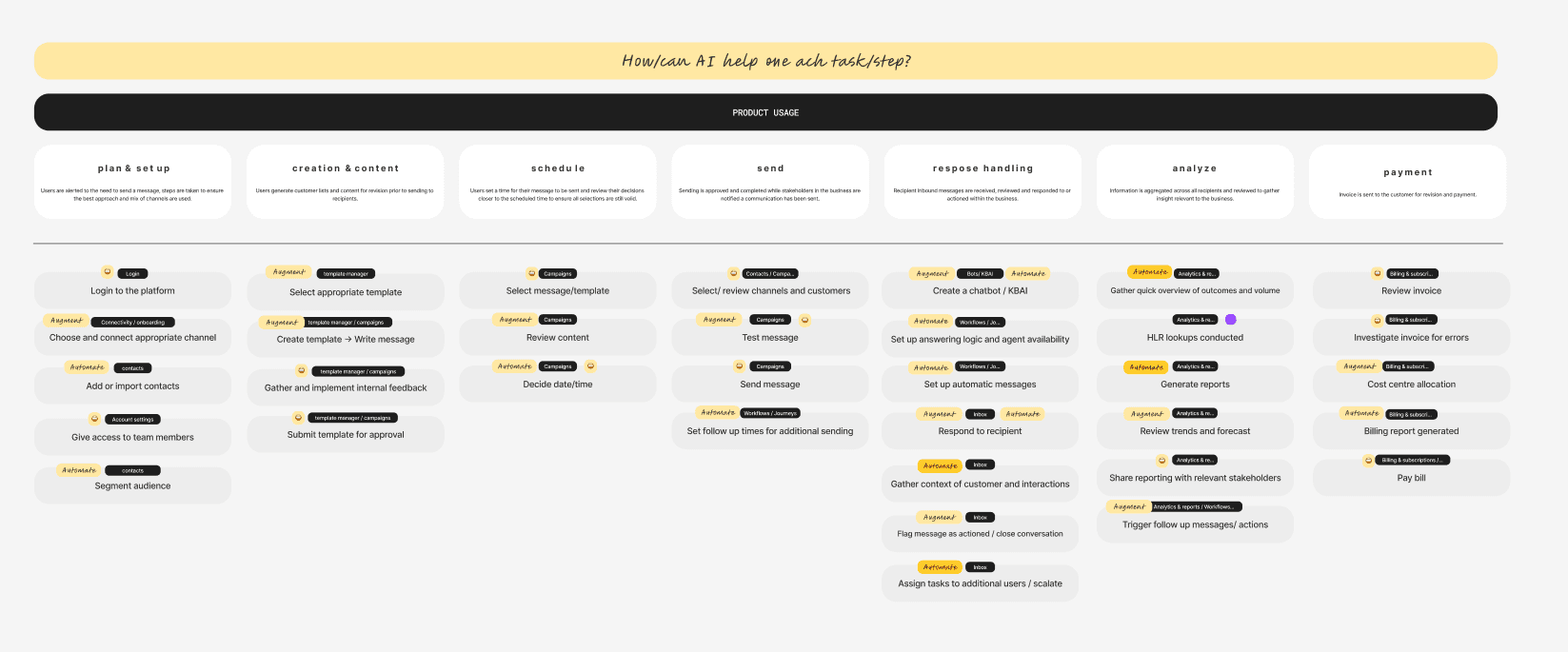
AI vision for Engage. I led a full AI vision for Sinch Engage, one of Sinch's hero products. This involved mapping real user pain points, identifying product gaps where AI could be a meaningful fit, and running an extensive competitive analysis to benchmark where Sinch stood. The output was a strategic design vision that connected user needs to product opportunities.
10DLC campaign review automation. One of Sinch's highest-impact AI initiatives was automating the review of 10DLC SMS campaigns… a fully manual process involving multiple reviewers checking brand criteria to prevent campaign rejection. 13000 campaigns came in monthly; average throughput was 42 days. I was the design lead on the solution: an AI-assisted review system that generated confidence scores for each campaign, enabling either full automation or human-in-the-loop review at scale.
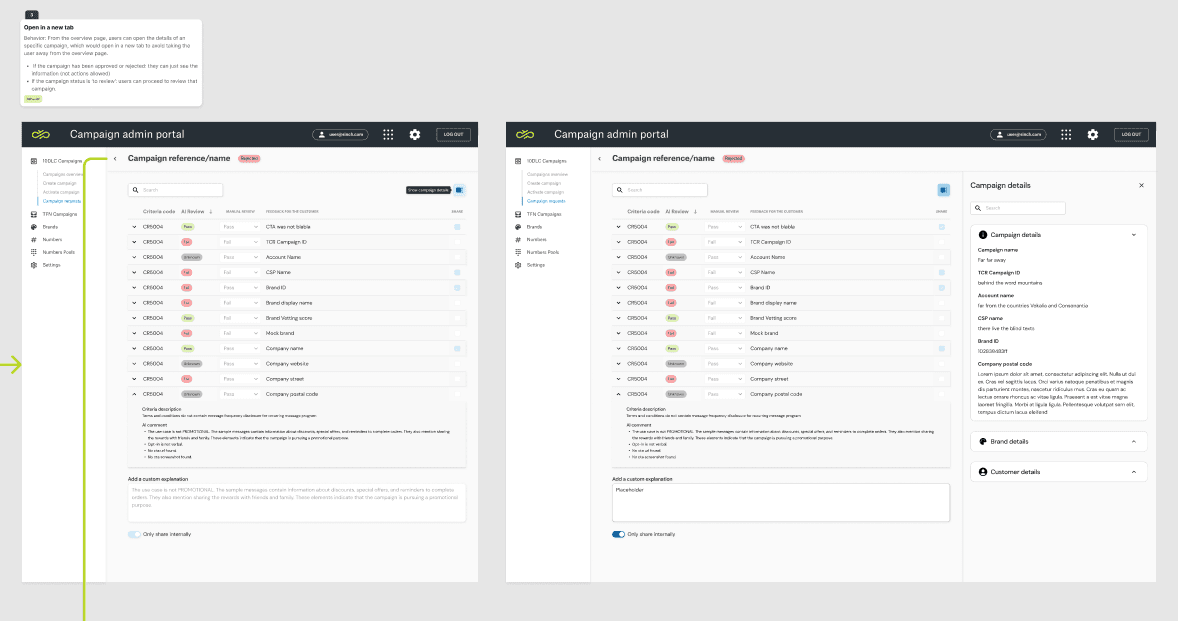
The initial automation target was 10%, with the system designed to grow from there, gradually reducing human intervention while keeping reviewers informed and in control. The projected savings ran to thousands of dollars per week in labor costs, alongside significantly faster time to market for customers.
What I learned
The teams that benefited most from the workshops and trainings were the ones who needed someone to help them think clearly about whether they should, and what problem they were actually solving.
That's a design role, and it was the most impactful work I did in this period. The work in this team will forever be one of my favorites experiences, where the space to explore, innovate and set the direction was endless.