Role
Team
The problem worth solving
Chatlayer is an enterprise chatbot platform. By 2023, the team was introducing generative AI capabilities, and almost no one was using them.
The assumption had been that customers would jump at the chance to make their bots smarter. The reality was more nuanced: these were enterprises that had spent months, sometimes years, carefully mapping every conversation path. They knew exactly what their bot would say and when. The idea of handing control to a "black box" (even a capable one) felt like a step backward, not forward.
After consulting with customers, two things became clear: trust and control were the real blockers, not understanding of the technology.
The insight that shaped the product
The AI team had been exploring RAG as a proof of concept.
The idea: instead of an open-ended language model, give the bot a defined set of documents to draw answers from. The AI could only work within those limits.
This reframed the pitch quite a lot… instead of "let AI take over [your bot]" like the world was hearning, it was more of: the AI knows exactly what you know, nothing more. That was something enterprises could reason about, and more importantly, trust.
I joined from the earliest stages to shape this from PoC into a product.
What I did
As Design Lead, I worked closely with product and engineering to take KBAI from 0 to 1… from early concept through closed beta and into a live, monetized feature.
My work spanned:
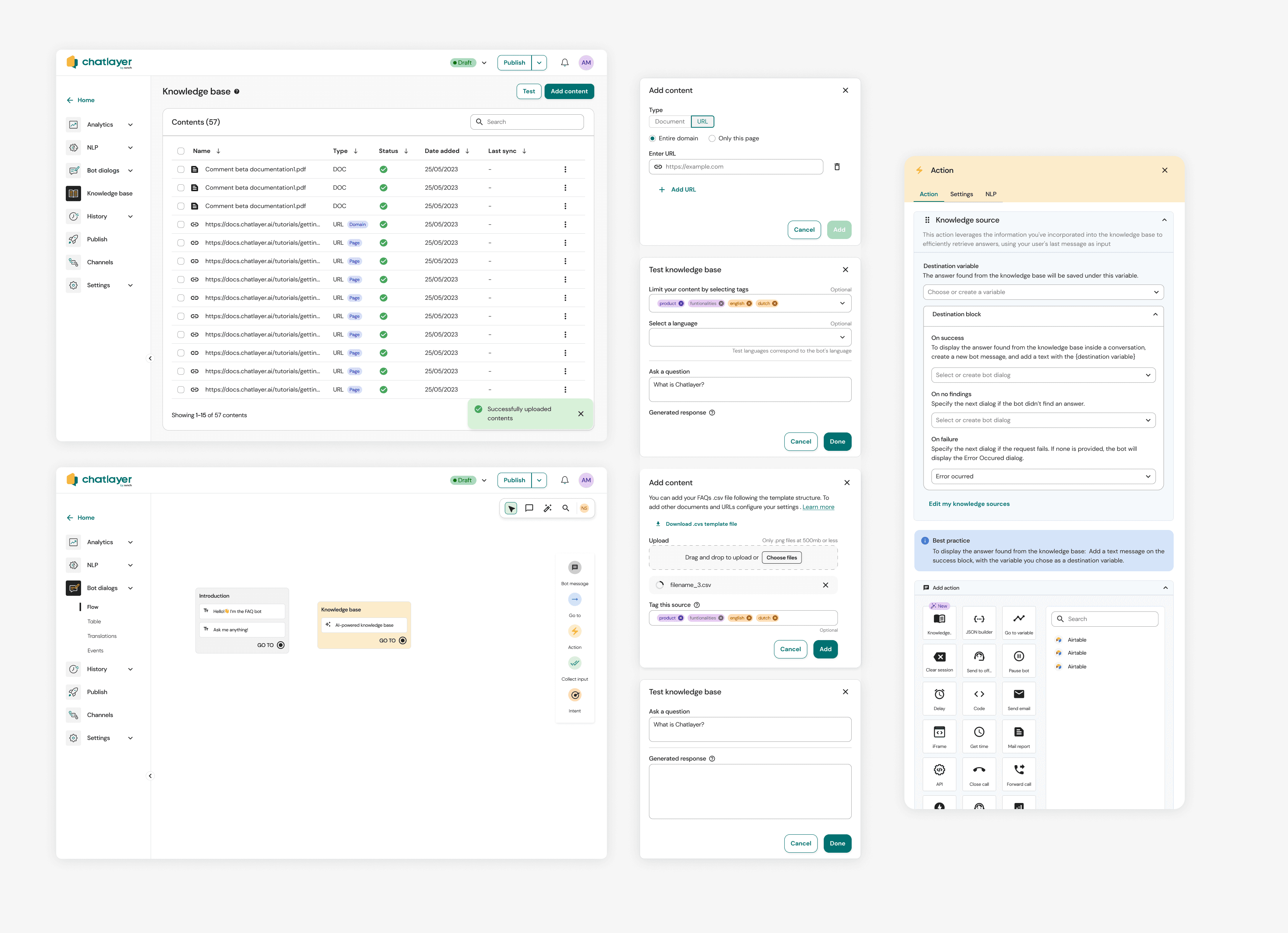
research and competitive analysis. We mapped the RAG landscape.. what competitors were doing, where the gaps were, and how our approach was differentiated. The key differentiator we found: competitors forced users to choose between PDFs or URLs. We designed KBAI to accept both, with tagging to control which documents trigger in which contexts. Competitors were also going for an either or approach, we integrated KBAI with our current flows to make customers' bots even smarter.
End-to-end UX and interface design. I designed the full user experience: uploading and scraping data sources, testing the knowledge base directly, configuring how KBAI sits within a chatbot flow (as a fallback, at introduction, connected to a specific intent), and the confidence/answer generation logic that gave users visibility into what the AI was doing and why.
Beta program design and research. I designed and ran a structured closed beta with selected customers… including the research plan, interview framework, and feedback synthesis across multiple sessions. This gave us the signal we needed to prioritize fixes and improvements, from response quality to the critical pain point of combining KBAI with intent-based flows.
Iteration and feature expansion. based on beta feedback, we shipped improvements including content tagging (to scope which documents apply to which contexts), scraping of password-protected pages for specific cases, clearer analytics and usage dashboards, and a pricing model with a credit-based add-on page.
Phase 2: the SMB opportunity.
We identified a second use case: KBAI as a standalone entry point for smaller companies who didn't need the full Chatlayer complexity.
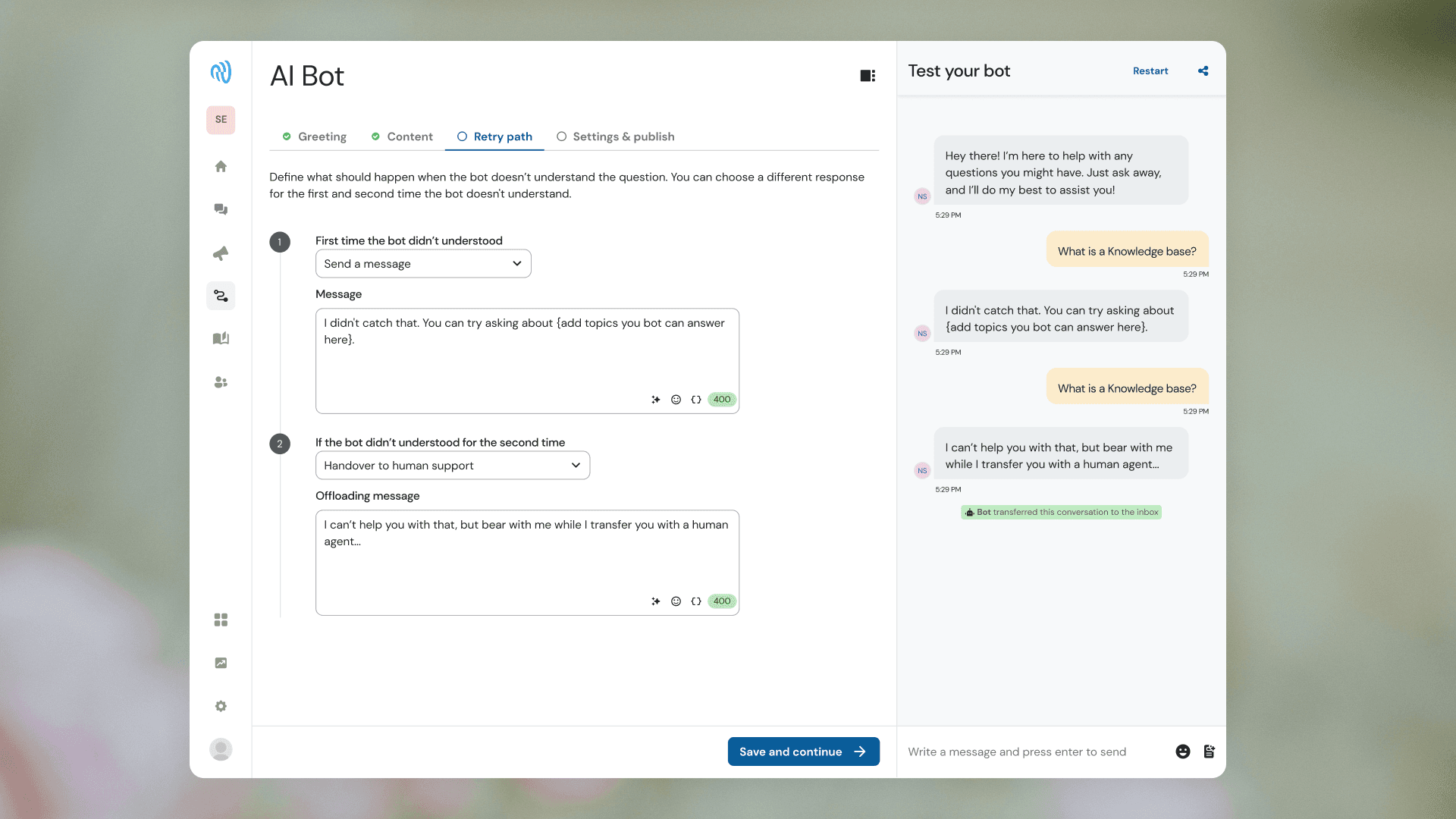
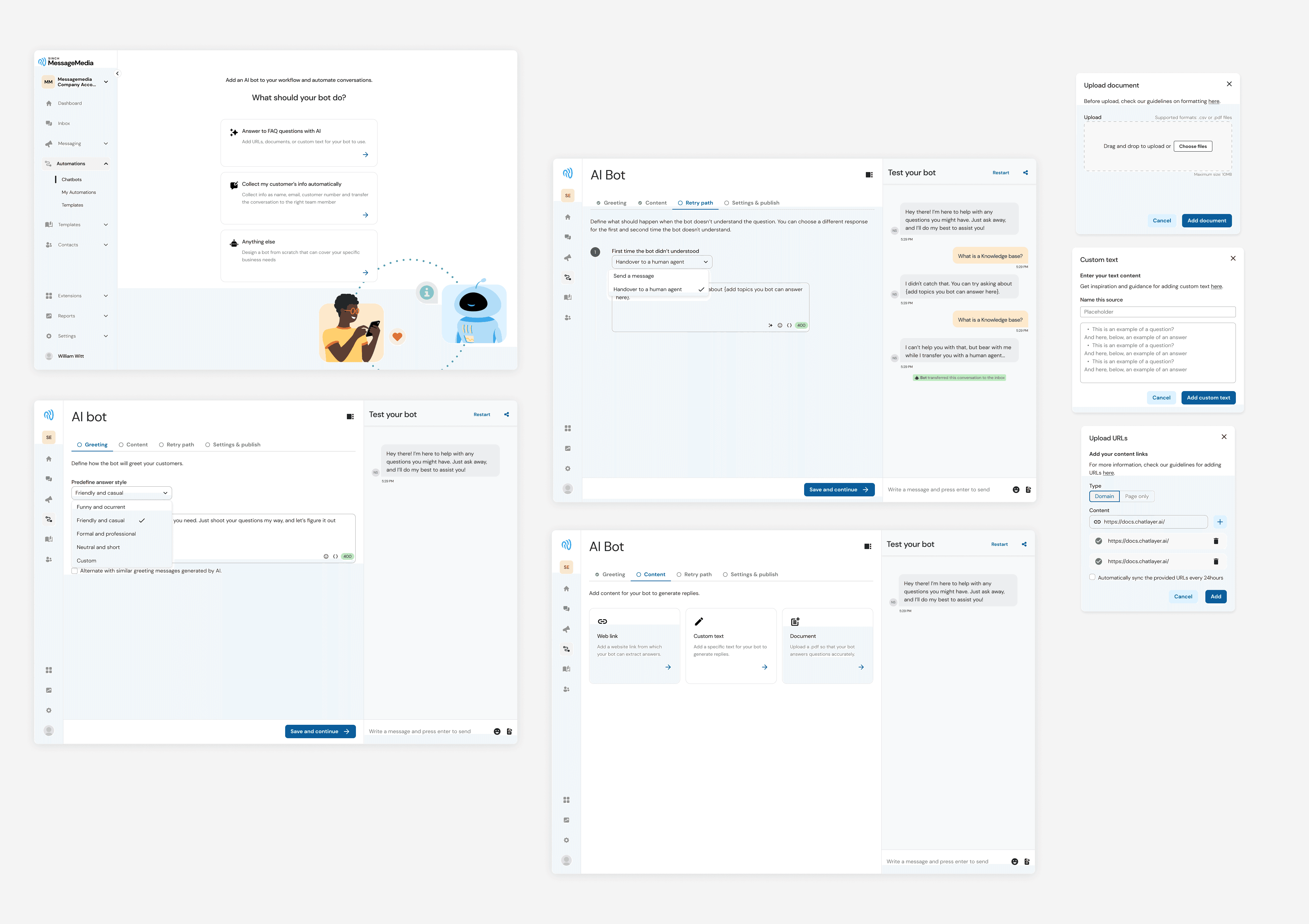
I led the design of a micro-frontend that detached the experience from Chatlayer entirely, creating an end-to-end flow for a small business to go from zero to a working FAQ bot. We ran usability testing with a representative audience and found strong task completion with minimal friction.
The phase didn't reach customers due to team restructuring, but the research informed the agent-based work that followed.
What we shipped
KBAI launched to all Chatlayer customers and is still live today. It became the go-to bridge for skeptical customers to introduce AI into their bots with confidence: scoped, explainable, and within limits they defined.
It also unlocked a new bot creation pattern: instead of mapping every intent from scratch (a high bar for new users), customers could stand up a functional FAQ bot in minutes by uploading documents they already had.
What I learned
The product lesson here is about the right abstraction at the right moment: Full generative AI was technically impressive but the wrong mental model for this audience at this time. KBAI worked because it gave users a boundary they could understand: the bot knows this document, not more. Designing around user mental models, instead of around capability, waskey.
The research once again surfaced the value of early customer contact. The beta gave us direct access to how customers were actually using the product, not how we imagined they would. The friction with combining KBAI and intents, for example, only surfaced in real use, and became one of our most important post-launch improvements.